
Work / Case study 1 of 3
Spend analytics · Enterprise · TC Energy, 2026
Turning enterprise spend data into a decision-ready asset
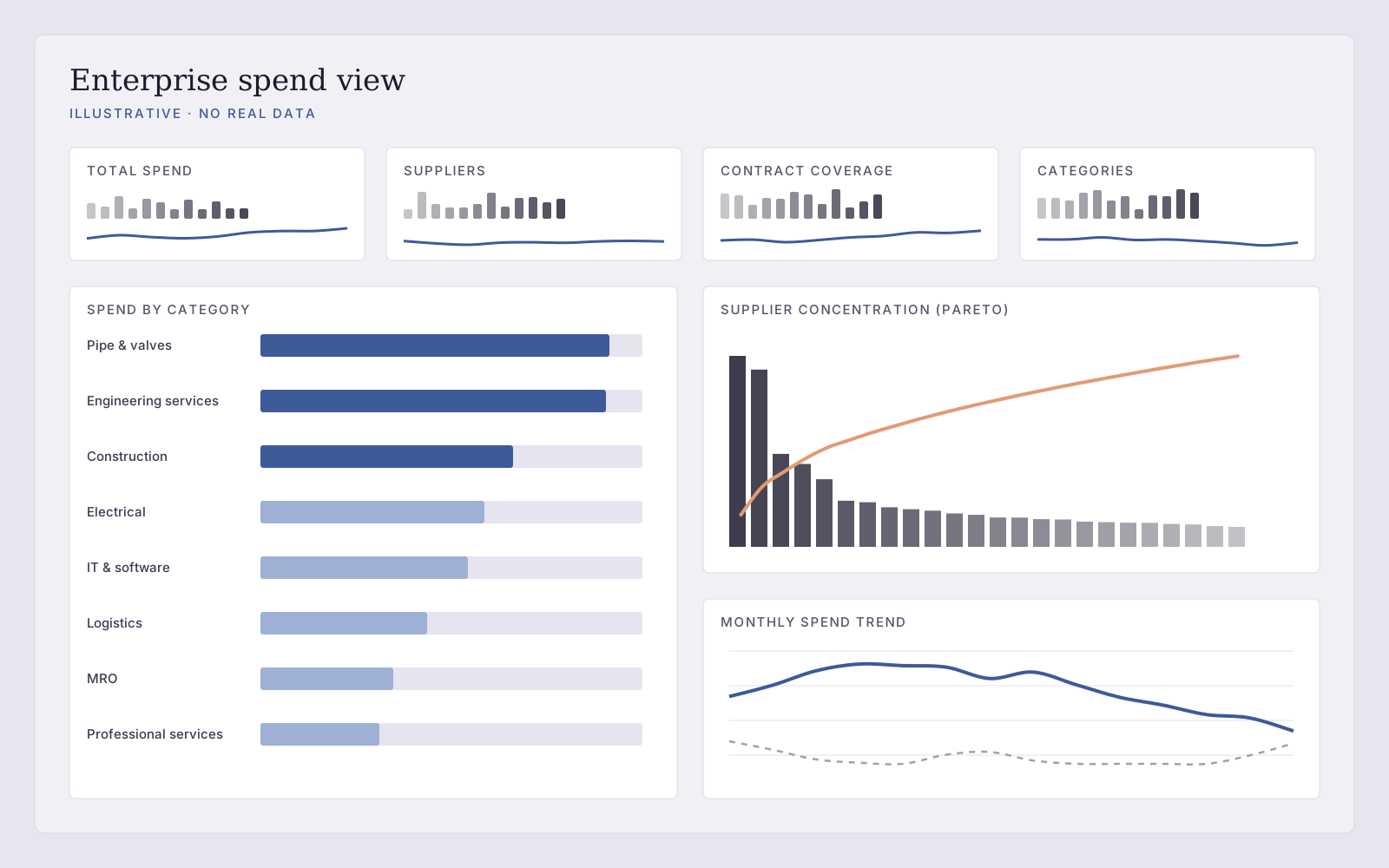
Leadership at a leading North American energy infrastructure company needed a view of enterprise spend that Supply Chain had never reported. The data had known limitations, the deadline was challenging and half my team was out. I delivered it on time, and it earned a Gold award.
Context
I lead Analytics & Market Intelligence for the Supply Chain of TC Energy, a leading North American energy infrastructure company. My team turns supply-chain data into the insight senior leaders use for strategic decisions.
The business problem
Leadership asked a new question about enterprise spend, on a challenging deadline. No existing report could answer it: Supply Chain had never produced this view. The underlying data had known limitations, so a quick extract would have given leaders a number, not an answer they could rely on.
My role
I owned the deliverable end to end as the team's manager: framing the question, designing the view and holding the commitment to leadership.
Key decisions
- Understand the data before building. I got up to speed on the business context and the data's limitations first, so every number could be explained to the leaders relying on it.
- Build a new view, not a patched report. No existing cut answered the question, so I designed one that did.
- Re-prioritize to protect the commitment. With half the team out, I re-ordered our work so the deadline held.
- Connect it to a wider baseline. I contributed analysis to the working group defining a supplier spend baseline, so the organization measures spend one way going forward.
Outcome
- Delivered on time: the first view of enterprise spend ever reported by Supply Chain.
- Recognized with a Gold award in 2026. In the award's words: “He quickly got up to speed on the context and data limitations and developed a new view that had never previously been reported by Supply Chain.”
Why it matters for AI
Every spend AI use case, from sourcing assistants to supplier-risk agents, rests on three questions: what is the data, where are its limits, and can a leader trust the number? Most AI teams skip them; I answer them for a living. Making data decision-ready, and being explicit about its limits, is what separates an AI system that is credible from one that is merely confident.